
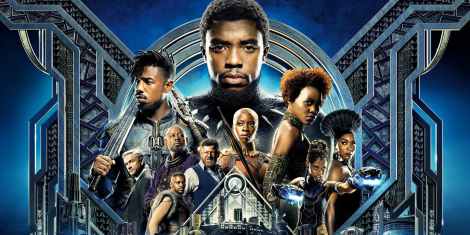
Official poster of Marvel’s Black Panther
By: Jefferson Marshall
Ryan Coogler’s 2018 film Black Panther is the first ever solo movie portrayal of the ‘Protector of Wakanda’. The movie is the 18th instalment of the juggernaut franchise known as the Marvel Cinematic Universe.
The story takes place after the events of Captain America: Civil War where T’Challa finds himself the heir to the kingdom of Wakanda. However, he faces conflict with people trying dethrone him which makes T’Challa question the morals and the traditional ways of his ancestors as a young king.
The film centres around the history of colonialism and how it affects the values of the film’s characters and the country of Wakanda itself in modern times.
Evan Narcisse is the co-writer of Marvel’s comic book miniseries “The Rise of the Black Panther”, he is also is a pop culture critic and he told the Washington Post:
“Wakanda represents this unbroken chain of achievement of black excellence that never got interrupted by colonialism.”
Several of the character’s motives throughout the film are based around colonialism.
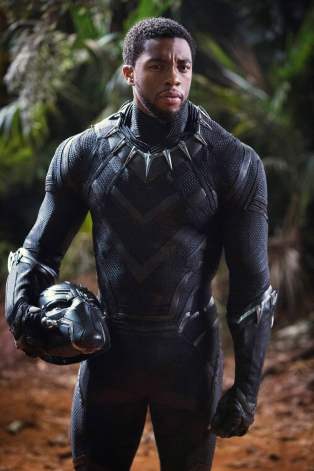
Chadwick Boseman as T’Chall (a.k.a Black Panther)
Firstly, at the beginning of the movie there is an explanation of how Wakanda became the advanced civilization that it is today, and it’s solely because the country’s avoidance of colonialism.
Secondly, one of the villains featured in this film, Ulysses Klaue, is a representation of colonialism as his main goal is to steal Wakanda’s vibranium and use it for his own means.
In addition, there are several instances in the movie where Wakadans show their defiance against western culture because in real life colonizer’s used to force their culture of their homeland onto other countries.
Finally, the main antagonist of the film, Erik “Killmonger” Stevens is a product of the ramifications of Wakanda’s constant evasion from the outside world and his purpose is to change that since his life has suffered from the country’s self-seeking mentality.
At the very beginning of the film the theme of colonialism becomes very apparent right away. During the prologue on how Wakanda was forged, the narrator mentions that in order to protect the strongest substance in the world (vibranium), the country and its possessions must hide in plain sight. By doing that Wakanda became an extremely prosperous country and the most technologically advanced nation in the world.
Film Critic James Wilt applauded how the film conveyed the theme of colonialism as he stated:
“Black Panther contains a fundamentally reactionary understanding of black liberation that blatantly advocates bourgeois respectability over revolution, sterilizes the history of real-life anti-colonial struggles in Africa and elsewhere.”
However, Wakanda’s neighbouring countries were not so lucky as colonialism occurred to several other African nations which shifted the framework of the continent forever.
The origins of Wakanda articulate that colonialism really dictated how the country operated from the nation’s inception. The forefathers of the civilization saw the happenings of the world around them and chose to harness their land and resources to avoid being like the other countries approximate to them.
Although it is a fictional universe, Wakanda is a blatant representation of what a real-life Africa could be like if it never had to deal with colonization. Associate Professor at Duke Divinity School Valerie Cooper enjoys that this film has started this conversation as she said:
“It is this possibility – the sweet possibility of a truly independent Africa and truly autonomous Africans, both beautiful and strong – that has created such anticipation.”
So, it is fair to say that if Wakanda never fell back and hid from their adversaries then
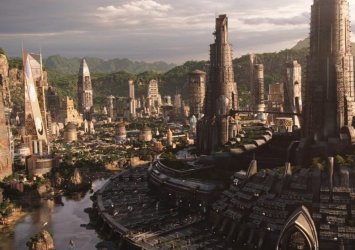
Skyline of a city within Wakanda
they would never be close to being the country that they are today.
Their culture would be replaced, their people would most likely be shipped away to become slaves and notably would not be able to use vibranium as their own.
Furthermore, this leads into one of the villains featured in Black Panther: Ulysses Klaue. His character and intentions during the film illustrate that he is purposely made to be the human embodiment of colonialism.
Klaue is a white South African who has been stealing vibranium from Wakanda for almost 30 years, while trying to exploit the country of their resources so Wakanda can become an international target for their surplus of the world’s strongest metal.
Film critic of The Root, Carolyn Hines, acknowledges the historical similarities of Klaue’s motives to a real-life colonizer:
“For centuries, African nations have had to defend their right to exist because white people and nonblack people of colour believed that black people were less than, and unsophisticated ‘savages’ who needed ruling. But instead of finding uneducated beings, Europeans were quite surprised to find a continent that was rich in more than minerals such as gold.”
Klaue has gone so far as bombing the Wakandan border to escape after the thieving vibranium which killed multiple civilians. One of the main reasons why Wakanda is so covert about their most valuable resource is because they are afraid that it’ll fall in the wrong hands.
During Klaue’s long history of illegally dealing vibranium, he once sold the metal to genocidal robot, Ultron. In Avengers: Age of Ultron, Ultron had numerous mechanical bodies he had control of, but wanted an indestructible body to help carry out his mission of replenishing the world of humans and replacing them with robots.
In Black Panther, the South African even used his own supply of stolen goods to create

Andy Serkis as Ulysses Klaue
his prosthetic arm which can also transform into a lethal energy blaster. Klaue’s justification towards continuously stealing vibranium from Wakandans was that they are “savages” and did not deserve a resource that valuable which is something he stated a few times in the movie. That furthers the point of Klaue’s prejudice mindset towards Wakanda and its people, and also displays that he carries a very similar mindset of a real-life colonizer.
It is apparent that Wakanda is rich of African culture from the country’s architecture, to the clothes Wakandans wear and the rituals that take place when appointing a new king. This is just another product of Wakanda not ever having to fall victim to colonialism. The tribes that settled Wakanda had the luxury from building their nation from the ground up with their own ideas; with their own values.
However, countries who have dealt with colonialism have their cultures and their traditions striped away from them. This shifts the entire social climate of a nation and as a native to a country it could feel like your identity is being taken away as well.
Kenyan journalist Larry Madowo can take his real life experiences and attest to this notion: “We call ourselves Francophone Africa versus Anglophone Africa. We [Kenyans] categorize ourselves based on who our oppressor was. I always find that a strange thing. Our identity is so deeply tied to our oppression.”
This is why throughout the film a few Wakandan characters had a very critical and nullifying reception whenever they were exposed to a westernization at any point.
The first example of this is when Nakia, Okoye, and T’Challa travel to South Korea to
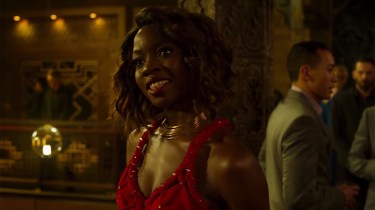
Danai Gurira as Okoye sporting a wig in the casino scene
intercept a potential vibranium deal between Ulysses Klaue and an unknown group of Americans (who turned out to be Everett Ross and the CIA). Knowing this, Okoye who is a bald women wore a wig to this occasion. Despite the complaints from Okoye having to wear it, she knows that to stay low key and to fit in with a crowd of Americans attending this function then the hair piece was necessary.
Okoye was trying to fit the norm of having long straight hair because it’s the Western standard of beauty for women.
Another overt example was when Everett Ross woke up in Wakanda recovering after being shot in the back days prior. When he wakes, he approaches T’Challa’s little sister Shuri. Ross tries to get her attention and Shuri abruptly says “Don’t scare me like that colonizer!” This is the first interaction between Ross and Shuri and the fact that Shuri greets him with angst shows that she may be assuming the worst from Ross as he is a white authority figure. Although Ross is a CIA agent trying to achieve the same thing as Shuri (to apprehend Klaue), the only time the Princess of Wakanda has seen or heard of white people is when they want to take something from them.
Additionally, during the car chase when Klaue and his men started shooting at Okoye and Nakia’s car. As the shots did no damage to the bulletproof car Okoye says “Guns…So primitive”. This alludes to how Wakanda’s weapon advancements are so superior to their Western counterpoints that the automatic guns that were being pointed and being fired in their direction did not phase the Dora Milaje General.
These interactions really emphasized the cultural differences between the Wakandan people and the Western world. Nonetheless, if Wakanada did ever become colonized maybe those American values and traits wouldn’t be so foreign to them.
The aforementioned priority of Wakanda keeping themselves a secret was essential for them to avoid colonialism and having to share their resources. Yet, the self-inflicted isolation has given Wakanda the inability to help others in any way for generations.
Wakanda does not accept aid or participate in international trade. Not only that, as mentioned earlier they’ve stayed idle for centuries as ages of slavery and colonialism came and went.
Generations later, enter Erik “Killmonger” Stevens, the main antagonist in Black Panther. The former Navy SEAL wanted Wakanda to help protect other people of colour around the globe who couldn’t protect themselves. He believed that the the surplus of assets that Wakanda possesses could help initiate a world-wide revolution where black people could take down the governments and societies that have oppressed them for generations.
Stevens father shared the same idea and he took action as well, but not before his own brother King T’Chaka killed him for stealing vibranium from his home country with Ulysses Klaue in effort to start this uprising.
This left a young Stevens to grow-up in the perilous streets of Oakland an orphan. Since then, the things Stevens experienced during his upbringing brought him to a revelation that involved arming black folks with Wakandan weapons.
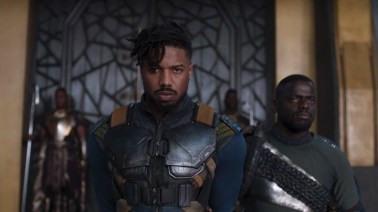
Michael B. Jordan as Erik “Killmonger” Stevens
Wakanda having a reputation of ignoring those in need film critic Osman Faruqi says Stevens’ motives are justified:
“Wakanda, under T’Challa’s reign, is just choosing to ignore it [racism, police brutality, etc]. Killmonger at least wants to do something to end the oppression of subjugated people.
Although the MCU has achieved excellence in its ten year history, the one ongoing criticism the franchise receives is almost all the villains that are featured in their films are too one-dimensional. The villains all seem to be evil just for the sake of it. The same can not be said for Black Panther.
In the end, Stevens political stance made T’Challa question the actions of his ancestors and ordered Wakanda to have various global outreach departments knowing he’s sacrificing the secrecy of his nation. Though he gave his life to what he believed was right, Stevens did change the outlook for his people and Wakanda.
His whole life he’s been living through the consequences of Wakanda’s evasion of foreign exposure, from his father being killed to how no one came for him when he was all alone. Even though it’s in a much less violent fashion, Stevens got what he wanted and Wakanda did end up getting involved with politics outside their borders despite the fear of being targeted by ‘the white man’.
Black Panther is a very unique film due to it being a socially conscious superhero film. However, what also made it exceptional is that one of the movie’s main issues was colonialism which is something that took place generations back. The movie truly showed what the long-term effects of colonization centuries after its inception.
Charles Bramesco is a film and television critic was aware of the film’s underlying theme as he stated:
“The film’s plot concerns the creeping tendrils of colonialism threatening to penetrate Black Panther’s secluded kingdom of Wakanda, drawing battle lines between traditionalism and globalist assimilation.”
The first evidence of the colonialism motif is how Wakanda prioritized staying under-the-radar. People were abandoned, shund and even killed to keep the country and its resources a secret.
Next, Ulysses Klaue was the personification of colonization. He was a white man who wanted to abduct the valuable resources Wakanda had to offer for his own use.
Additionally, various moments in the film displayed Wakadan’s distaste for Western normalities including weaponry, beauty standards and culture due to never having to conform into those values through colonization.
Lastly, the main villain Erik “Killmonger” Stevens was treated so poorly by his own home country because of the fact that they did whatever it took to stay a secret even if it meant hurting one of their own. The country’s fear of potentially being targeted by other nations for their resources truly had a negative effect on the life of Stevens.
With the theme of colonialism being so evident in the film, Black Panther will inform this type of injustice to a whole new generation.

